Mitakuye Oyasin All My Relations
Mitákuye Oyás’iŋ
“All My Relations”
A Rocky Mountain High Photography Essay
When the Veil Grows Thin
There are moments in life when the world no longer feels separate from us.
Moments when the veil grows thin.
Standing alone beneath a cold western sky…
Watching fog spill through the pines like breath from another age…
Hearing the distant cry of a meadowlark greet the first light of dawn…
Something ancient stirs within us.
Not thought.
Not language.
Recognition.
As though the soul remembers something the modern world has tried desperately to make us forget.
That we were never separate from this earth to begin with.
The Meaning Beneath the Words
The Lakota phrase Mitákuye Oyás’iŋ is often translated as:
“All my relations.”
But the phrase is far deeper than translation can carry.
It is not simply a statement of family or kinship.
It is a spiritual understanding that existence itself is relational.
The rivers are our relations.
The mountains are our relations.
The eagle circling overhead, the storm gathering beyond the plains, the old cottonwood twisted by a century of wind…
All relations.
Even the silence.
Especially the silence.
The Illusion of Separation
Modern life teaches us to stand apart from the world.
We are taught to define ourselves through ownership, accomplishment, and identity.
We build walls between ourselves and the natural world.
Between ourselves and one another.
Even between ourselves and our own souls.
But the old wisdom traditions understood something profound:
The illusion of separation is the root of much suffering.
We are not disconnected observers moving across a dead landscape.
We are participants within a living one.
The air entering our lungs once moved through ancient forests.
The water within our veins once fell as snow upon distant peaks.
The dust beneath our boots may contain the memory of buffalo trails, wildfire ash, and generations long forgotten.
Everything touches everything.
Nothing truly stands alone.
Why the West Still Calls to Us
Perhaps this is why the American West speaks so powerfully to certain people.
The West still remembers.
There are places among the Rockies, the deserts, and the high plains where the noise of modern life falls away long enough for us to hear something older beneath it.
A deeper rhythm.
You feel it standing alone beside an empty road disappearing into the horizon.
You feel it in abandoned homesteads slowly surrendering back to the earth.
You feel it when cold mountain wind moves through the pines with the sound of whispered prayer.
The West humbles us because it reminds us of our true scale.
Yet strangely, that smallness does not diminish us.
It reconnects us.
Photography as Communion
Photography, at its deepest level, becomes part of this remembering.
Most photographs merely document appearances.
But occasionally… a photograph becomes something else entirely.
A communion.
There is a sacred difference between photographing a landscape and entering relationship with it.
One seeks possession.
The other seeks understanding.
The ego says:
“I captured this scene.”
But the quieter voice — the older voice — says:
“For one brief moment, I belonged completely to this place.”
That distinction changes everything.
Because the most powerful images are rarely made through technical perfection alone.
They are made through presence.
People can feel when a photograph was created with reverence instead of conquest.
The image carries it.
A kind of emotional residue.
The Search for Reunion
I think many photographers spend their entire lives unknowingly searching for this feeling.
Not simply beautiful light.
Not simply dramatic composition.
But reunion.
The feeling that for one fleeting breath, the boundary between ourselves and the world dissolved.
And perhaps this is why solitude in nature can feel so healing.
Out there beneath immense skies, we are no longer surrounded by artificial identities.
The world does not care about status, success, or performance.
The mountains ask only honesty.
The river asks only presence.
The wind asks only that we listen.
The Beauty of Weathered Things
As we grow older, these truths often deepen.
Time strips away illusion.
The ambitions that once seemed so urgent begin to lose their gravity.
The noise quiets.
The soul begins searching for what endures.
And often, what endures is relationship.
Not ownership.
Not achievement.
But connection.
The older I become, the more I understand why weathered things possess such beauty.
An old barn collapsing into the prairie.
Wrinkles carved into a rancher’s face by decades of sun and wind.
Ancient canyon walls scarred by unimaginable time.
These things move us because they carry evidence of endurance.
They have remained in relationship with the world.
They have been shaped by it.
Perhaps we are no different.
Perhaps aging itself is a kind of landscape photography written into the body.
Every scar a canyon.
Every grief a riverbed.
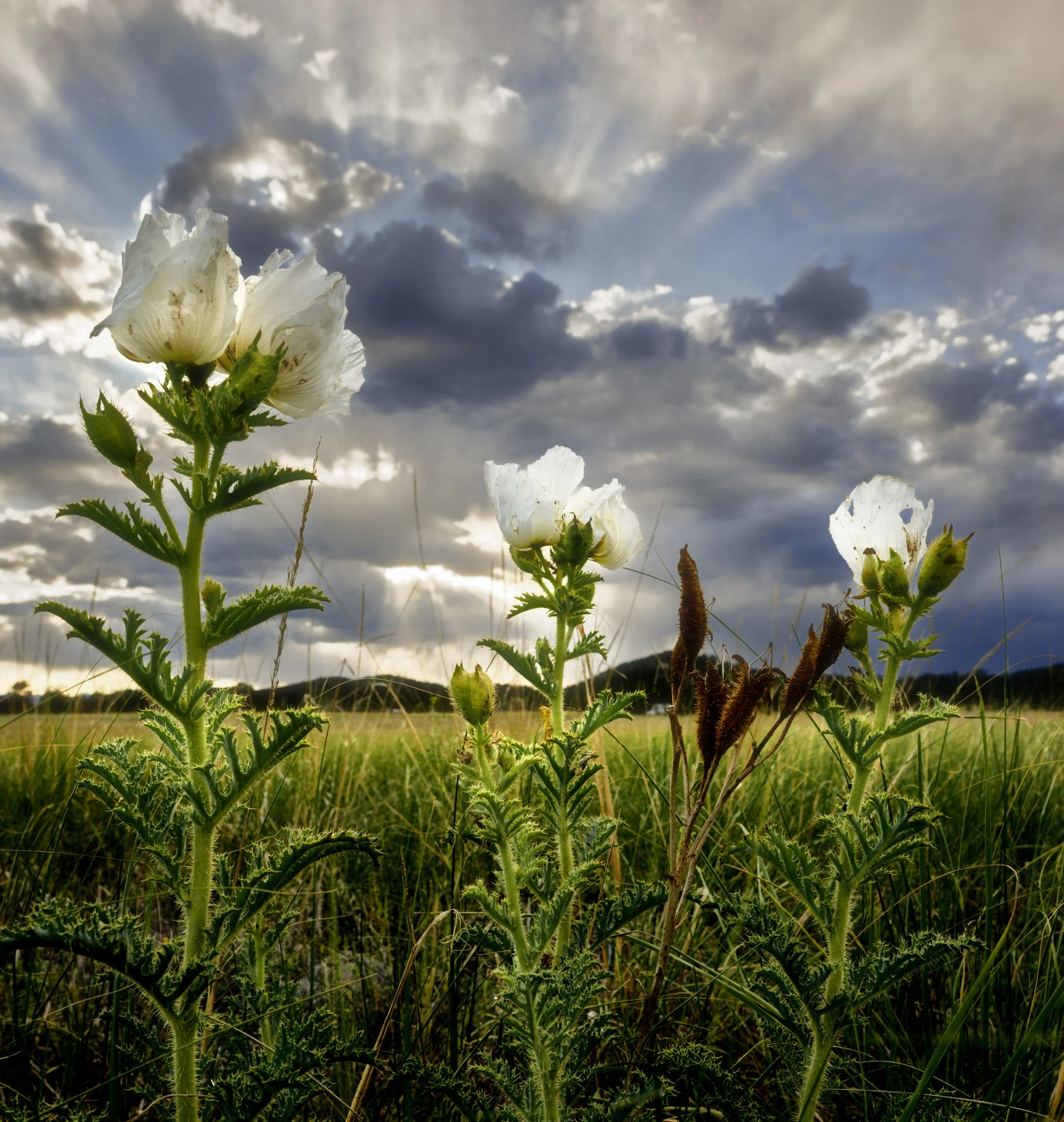
Every joy a brief shaft of golden light breaking through storm clouds.
Even the Storm Belongs
Mitákuye Oyás’iŋ also asks us to recognize difficult relations.
Not only beauty.
Not only peace.
All relations.
The grief we carry.
The mistakes we regret.
The loneliness that sometimes follows us through quiet rooms late at night.
Even these belong to the human journey.
Even these have something to teach.
The storm is no less sacred than the sunrise.
Without hardship, we might never recognize grace when it finally appears on the horizon.
The Question Behind Every Photograph
Sometimes I wonder if what we truly seek through art is not self-expression alone, but reconciliation.
A way to heal the fracture between ourselves and the living world.
Perhaps every photograph is really a question:
“Can I still feel connected?”
And every meaningful image answers softly:
“Yes.”
“You were never truly alone.”
All My Relations
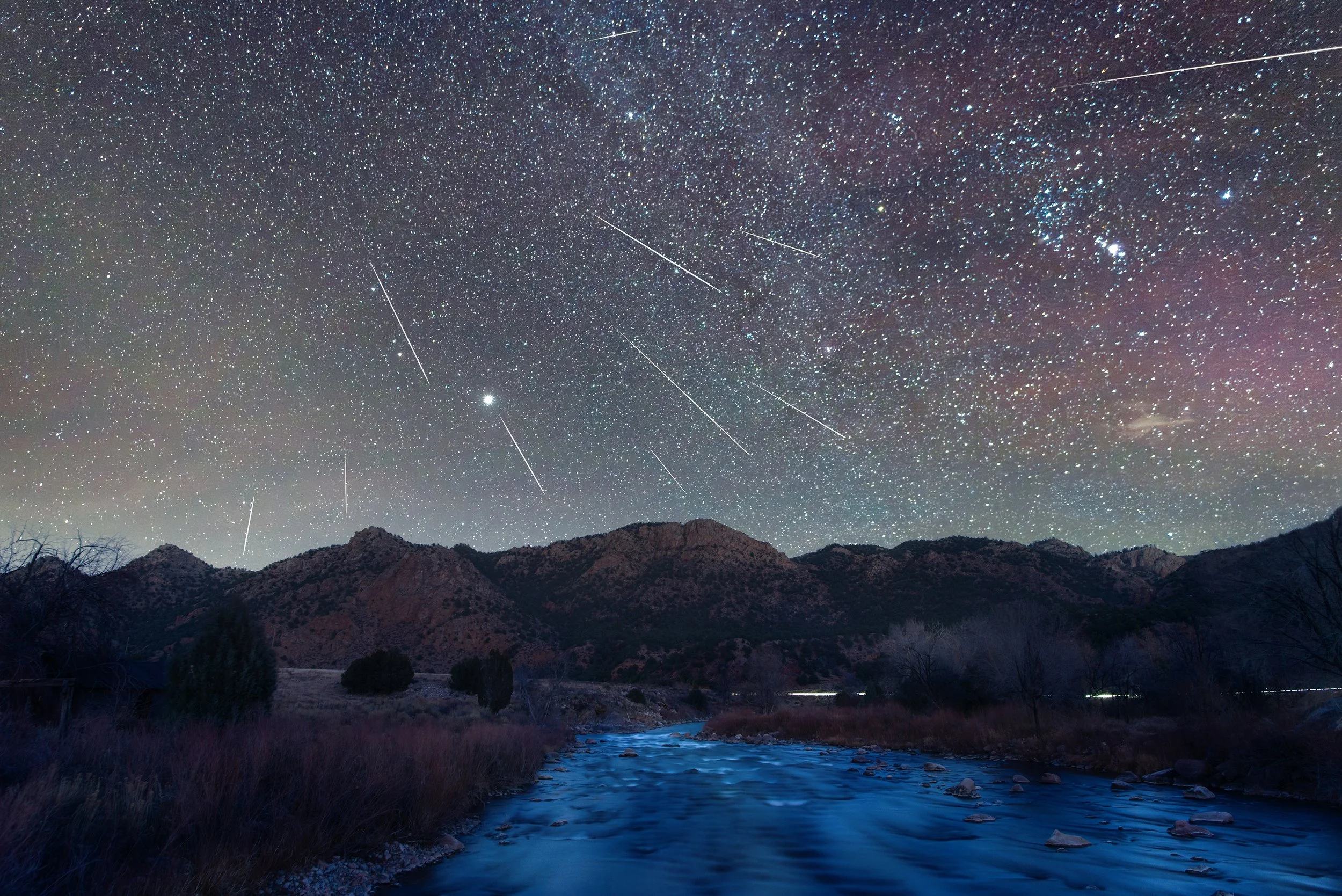
Out here in the West, beneath endless skies and the ancient breath of the mountains, it becomes easier to remember.
The meadowlark singing at dawn…
The cold mist rolling through pine-covered valleys…
The silence of snow falling across forgotten roads…
All relations.
The land is not simply something we photograph.
It is something we belong to.
And maybe that is what the soul has been trying to tell us all along.
Mitákuye Oyás’iŋ.
All my relations.